What if the best person for your next role just happens to live outside your city, or even outside your country?
For years, many businesses have built their hiring strategies around convenience. Finding the closest, most convenient candidates, but that model no longer works as well as it used to. With the limited talent pool, the skills you need are now harder to find and expensive to find locally.
According to the World Economic Forum’s Future of Jobs Report 2025, about 63% of employers are struggling with skills gaps. Only 29% of them think talent availability will improve by 2030, while 42% of them it to decline.
For Ruffy Galang, CEO of Remote Employee®, that changes the question business leaders should be asking:
“The question isn’t, ‘Who can we hire nearby?’ It’s, ‘Where can we find the right people for the work we need to get done?’ Once you stop making location the first requirement, your talent pool becomes much bigger.”
 Ruffy GalangCEO of Remote Employee®
That’s the idea behind borderless hiring. Instead of building your workforce locally, you build it around the skills, experience and capabilities your business needs.
In this guide, we’re going to explain what borderless hiring is, why businesses are looking beyond their local talent pools, how cross-border recruitment works, and what you need to consider before building a global workforce.
What Is Borderless and Global Hiring?
Borderless hiring is a recruitment strategy that allows businesses to source and hire talent across countries instead of limiting recruitment to their local labor market.
With the help of today’s digital tools and remote-work technology, employees don’t need to relocate or move to find a new job. They can work remotely, from a secured global office, or from home – and still be fully integrated into your company’s systems, workflows, working hours, KPIs, and management structure.
Companies can use different models to hire internationally, including:
- Dedicated offshore staffing
- Employer of Record (EOR) services
- This is where a provider can legally employ remote workers in another country and simplify compliance in foreign markets.
- International contractors
- Direct employment through a foreign entity
Borderless hiring is therefore a scalable business strategy.
The goal with global employment is simple: instead of asking where candidates are located first, you identify the skills your business needs and expand your search to markets where those professionals are available.
This is becoming more important as local hiring gets harder. ManpowerGroup reports that 74% of employers are having trouble finding the skilled talent they need. When you limit yourself to one local market, it’s even harder.
Borderless Talent: Why Businesses Are Looking Beyond Local Labor Markets
When qualified candidates are already in short supply, limiting your search to one local market can make hiring even more difficult. Borderless talent gives you another option. By hiring internationally, you can tap into:
- Larger top talent pools
- Specialized skills
- Different levels of experience
- Professionals in established global talent markets
- More options when local hiring becomes competitive
- Different labor-cost structures
This doesn’t mean you need to stop hiring locally. It simply means local hiring doesn’t have to be your only option to find the right people for your business.
That flexibility is going to become more important. The World Economic Forum estimates that by 2030, about 170 million new jobs will be created, 92 million will be displaced, and nearly 40% of the skills needed for work will change.
When those skills aren’t readily available nearby, borderless hiring gives many organizations another place to look, helping companies reach the right person in other countries when local supply is limited.
Borderless Workforce: What Does It Look Like in Practice?
A borderless workforce is when employees are working from different locations, or countries, all working together as part of the same organization. Working with people from different countries and cultures can drive innovation and creativity, but you also need to be aware of cultural differences to avoid misunderstandings.
A well-structured global team can still work inside the same business system, workflows, KPIs, communication channels, project management platforms, reporting structures and company culture – even if they’re not all in the same office.
The main difference is that employees can work from wherever they are and still be part of the team. Here are some factors to consider:
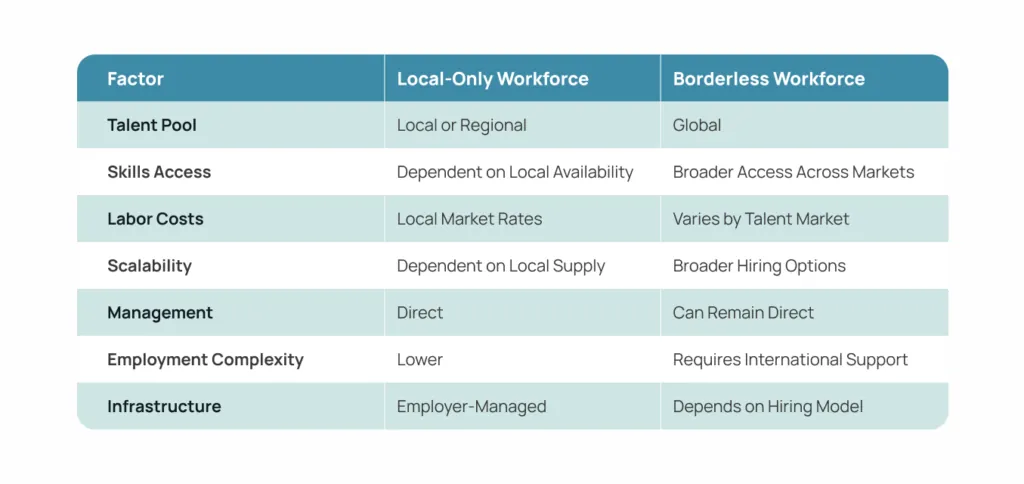
The biggest misconception is that hiring globally means giving up control of your operations. But it doesn’t have to.
With a dedicated staffing model, international employees can work exclusively for your business while you manage their responsibilities, performance, priorities, and workflows directly. The staffing partner supports the employment infrastructure behind the team rather than taking over your business processes.
Borderless Work: How Technology Makes a Global Team Possible
Borderless work has become possible largely because employees no longer need to be physically located beside their managers or company systems to perform many professional roles.
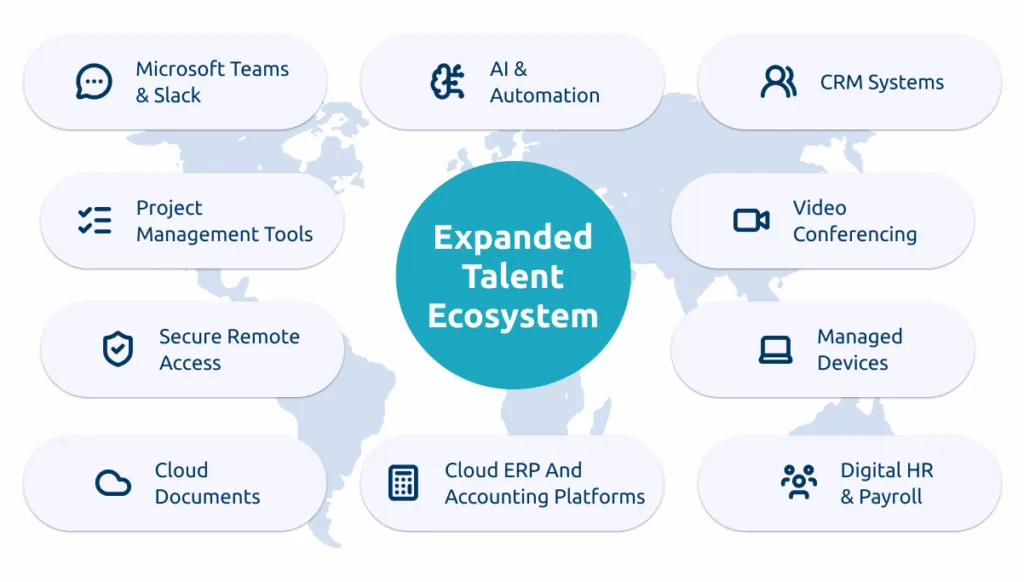
Cloud platforms, communication software, secure networks, project management systems, video conferencing, digital payroll systems, and other technologies allow teams to collaborate across locations. A borderless workplace may rely on:
- Microsoft Teams, Slack, or similar communication tools
- Cloud-based ERP and accounting platforms
- CRM systems
- Project management software
- Secure remote access
- Managed devices
- Video conferencing
- Cloud document storage
- Digital HR and payroll platforms
- AI and automation tools
Technology can remove some barriers, but businesses still need to manage operations and compliance well. Businesses still need clear processes for communication, accountability, security, performance management, data access, and employee support. Distributed teams also need to coordinate across time zones.
That’s why successful borderless work isn’t simply about allowing employees to log in from anywhere. It’s about putting the right people, technology, management systems, and infrastructure together, while ensuring AI tools used in hiring or workforce management still have human oversight.
Ways to Build a Borderless Team
There isn’t one way to hire internationally. The right structure depends on whether you need project-based support, an individual international employee, a large permanent overseas operation, or an ongoing dedicated team.
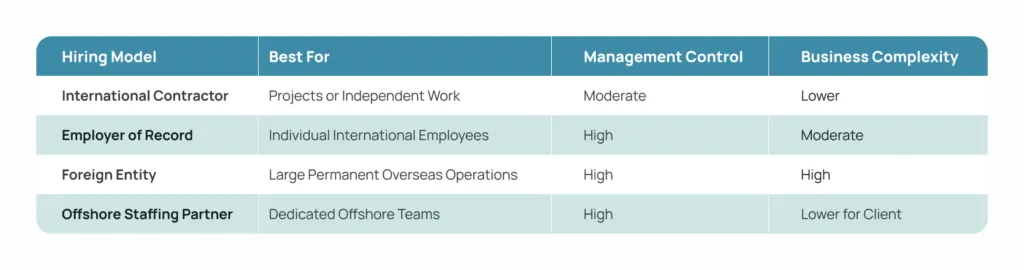
International Contractors
Contractors can make sense when you need specialized or project-based work without creating a permanent position. Businesses still need to consider worker classification, contracts, payment processes, and local requirements when engaging contractors internationally.
Employer of Record
An EOR can legally employ an individual in another country on behalf of your business, making it useful when you need to hire employees in markets where you don’t have a local entity; some Employer of Record services operate in 170+ countries. EORs can onboard employees in 5–7 business days and, in some cases, support payroll for global teams in under 20 minutes, but legal compliance varies by country, and missteps can lead to severe legal penalties.
Foreign Entity
Setting up your own foreign entity provides greater control but also creates considerably more administrative responsibility. This approach may make sense for businesses planning large, permanent operations in another country.
Offshore Staffing Partner
Offshore staffing can work particularly well when you want to build a dedicated international team while continuing to manage the employees directly. The staffing provider handles the local infrastructure behind the workforce, while your company manages the actual work.
Why Borderless Hiring Is Becoming a Long-Term Workforce Strategy
Borderless hiring is about more than allowing people to work remotely. For businesses facing talent shortages, rising employment costs, or rapid growth, it can become part of a broader workforce strategy.
1. Access Skills That Are Difficult to Find Locally
When the local candidate pool is limited, expanding geographically helps companies hire the right person faster when local supply is thin, including across multiple markets if needed. This is particularly important when skills gaps are already affecting businesses’ ability to transform and grow.
2. Reduce Geographic Hiring Constraints
Your candidate pool no longer ends at the edge of your city, state, or country. That gives recruitment teams more options before they compromise on skills or leave positions vacant.
3. Build Capacity at a Different Cost Structure
Labor costs vary significantly between countries, though borderless hiring still depends on cost-effective handling of cross-border payments and managing payroll across multiple currencies.
Hiring from established offshore talent markets can allow businesses to increase headcount at a lower labor cost than adding equivalent roles locally. However, the lowest salary shouldn’t be the goal. Businesses still need to consider experience, employee benefits, infrastructure, retention, security, and workforce support.
4. Scale Without Expanding Local Infrastructure
Adding ten local employees can mean more than ten salaries. You may also need recruitment resources, HR support, payroll administration, equipment, IT infrastructure, benefits, and potentially additional office capacity.
The right international staffing structure can reduce much of that operational burden, including local payroll and global payroll complexity where payroll processing can involve multiple currencies and local systems, with EORs able to process payroll in 130+ currencies.
The right partner can also centralize payroll support across many countries.
5. Hire Around Skills Instead of Location
Ultimately, borderless hiring changes the order of the hiring decision.
Instead of: Location → Available Candidates → Available Skills
You can approach hiring as: Skills Required → Best Talent Market → Right Candidates
That opens considerably more possibilities.
Why the Philippines Is a Strong Market for Borderless Talent
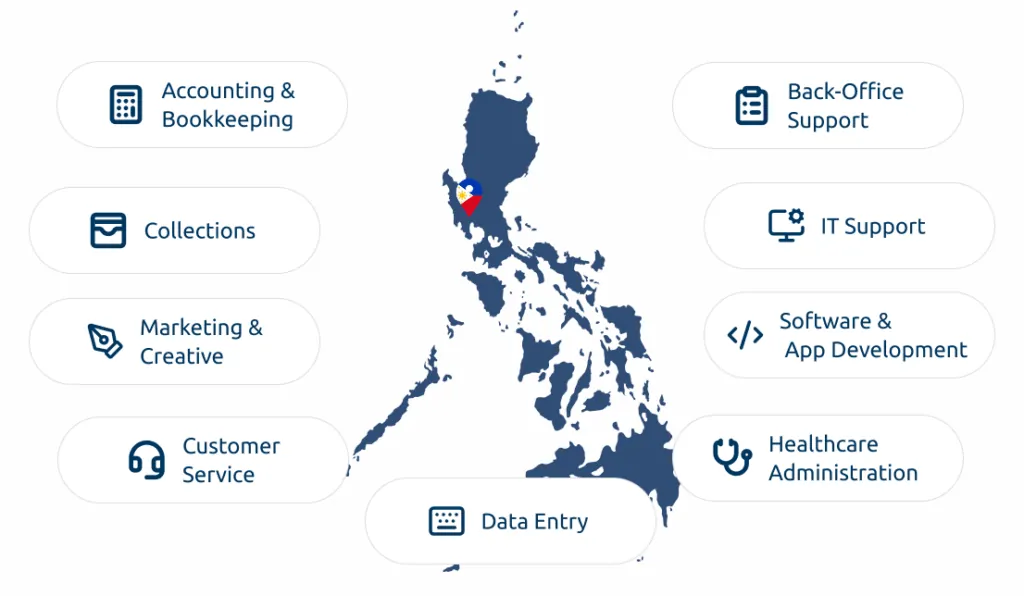
The Philippines has developed a large workforce across services, digital industries, professional support, technology, and other business functions. That gives businesses access to talented professionals and can also support coverage across different time zones, while improving localized support for customers in new markets.
The Philippine Statistics Authority reported that the country’s digital economy employed 10.39 million people in 2025, accounting for 21.2% of total employment. The country’s broader services sector is also substantial. In December 2025, 62.4% of employed Filipinos worked in services.
For international businesses, that creates opportunities beyond traditional call center work. Cross-border work can also create tax-obligation issues, including potential taxable presence, if the structure is not set up carefully. Companies can recruit professionals across areas such as:
- Accounting and bookkeeping
- Back-office support
- Collections
- Customer service
- Data entry
- Healthcare administration
- IT support
- Marketing and creative
- Software and application development
For businesses considering outsourcing to the Philippines, the opportunity isn’t simply about reducing labor costs. It’s about accessing another established talent market when the skills you need are difficult or expensive to find locally, while still maintaining quality.
What Are the Main Borderless Hiring and Time Zone Challenges to Consider?
Businesses hiring across borders may need to consider:
- Local employment requirements
- Payroll across countries, including different currencies and regulations
- Employee benefits
- Tax requirements
- Worker classification
- Data security
- Equipment and IT
- Time-zone coordination
- Communication, as time zone differences complicate scheduling and collaboration
- Cultural differences, which can lead to misunderstandings in teams
- Employee engagement and retention
Employment regulations do not become borderless when companies recruit globally, and compliance with local labor laws remains a major challenge that affects a company’s ability to hire well. Missteps in labor law compliance can undermine long-term success and lead to severe legal penalties.
Data privacy regulations vary by country, and international data protection rules such as GDPR must also be followed. That’s why choosing the right international hiring model is just as important as finding the right candidate.
Common Questions About Borderless Hiring
What is Borderless HR?
Borderless HR is the management and support of employees working across countries or locations. It can include international employment, payroll, benefits, HR administration, compliance, employee engagement, and policies designed to support a distributed workforce.
What is Borderless Recruitment?
Borderless recruitment is the process of sourcing and evaluating candidates without restricting the search to one local labor market. Instead of starting with location, businesses can identify the skills and experience they need and recruit qualified candidates from countries and talent markets where those capabilities are available.
How does recruitment technology support borderless hiring?
Recruitment technology supports borderless hiring by making it easier to source, assess, interview, and manage candidates across locations. Applicant tracking systems, video interviews, digital skills assessments, recruitment platforms, AI tools, and online onboarding systems help teams manage candidates across countries. Technology simplifies the process, but businesses still need the right recruitment strategy and local employment structure for international hires.
Is borderless hiring the same as remote hiring?
Not exactly. Remote hiring refers to hiring employees who do not work from a company’s physical office, while borderless hiring expands recruitment beyond geographic boundaries. A borderless employee may work from home, an offshore office, or under a hybrid arrangement depending on the business and employment model. They often work remotely without being in the same office as the rest of the team.
Build a Borderless Workforce Without a Local Entity
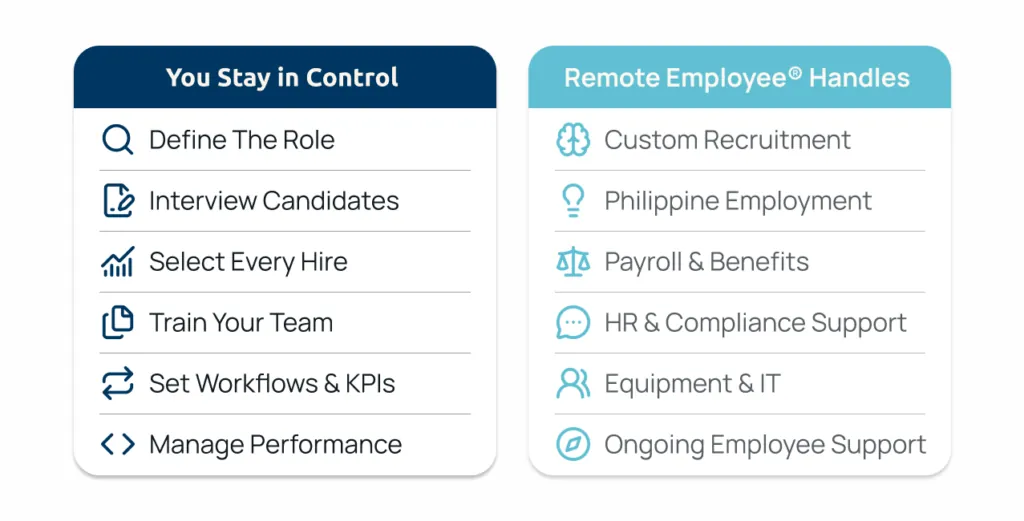
Accessing global talent shouldn’t mean your business has to figure out international hiring alone. We help businesses build dedicated teams in the Philippines while keeping control where it belongs with you. You define the role. We recruit specifically for it. You interview the candidates. You choose who joins your team. And you manage their work directly.
Your employees work inside your systems, workflows, hours, KPIs, and company culture. While behind the scenes, we handle the heavy lifting, including custom recruitment, Philippine employment, local payroll, benefits, HR, compliance support, equipment, IT support, and ongoing employee support to help onboard employees and support new hires faster while keeping local regulations and local labor laws in view.
You can choose how your team works—office-based, work-from-home, or hybrid, based on your roles and operational requirements.
This gives clients another way to expand your talent pool and add capacity so you can focus on leading the team instead of building the local infrastructure yourself, while potentially reducing labor costs by up to 70% compared with local employment. It can be a practical way for a first international hire when you do not want to set up a local entity first.
Stop Hiring Based on Location. Start Hiring Based on Talent.
The person your business needs next may not live within commuting distance of your office—or even in the same country. That shouldn’t stop you from hiring them.
Borderless hiring allows you to go where the talent is, build the team your business actually needs, and scale beyond the limits of your local labor market.
Ready to expand your talent pool? Visit RemoteEmployee.com to start interviewing skilled professionals in the Philippines and build a dedicated team without the cost and complexity of expanding locally.