


| Don’t have the time to read? Listen here instead or save to your Spotify playlist.
 |
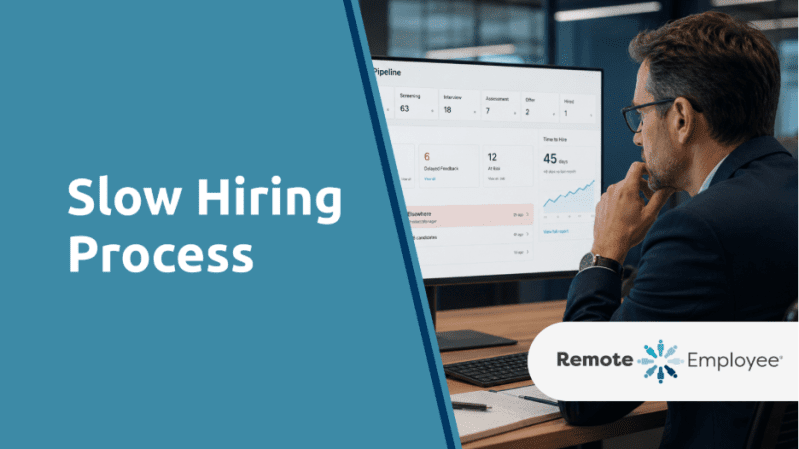
If your recruitment process feels slow, it’s not just an HR issue — it’s a growth problem tied directly to slow hiring and prolonged decision cycles.
Today’s candidates move faster than internal approval chains, fragmented interview processes, unclear hiring timelines, and overloaded hiring managers. While employers debate the next steps, top talent—including skilled professionals and passive candidates—accept another job offer. The result? Vacant positions, overworked teams, and a damaged employer brand during the job search phase.
According to TALiNT Partners, more than half or 71% of candidates drop out of a long hiring process if it takes too long, even when they’re interested in the role. When candidates lose interest, it’s rarely about compensation — it’s about speed.
A slow hiring process doesn’t just delay hiring — it actively causes companies to lose good candidates. It also increases the risk of making a bad hire, as rushed decisions at the end of a prolonged process can lead to costly mistakes.
As Ruffy Galang, CEO of Remote Employee®, explains:
“Companies lose great candidates not because they’re slow — but because their hiring systems create hesitation. When roles are clear and talent is vetted upfront, hiring decisions move naturally.”
In this guide, we break down why slow hiring persists, where the real hiring bottleneck forms, and how employers can improve hiring process optimization without sacrificing quality, control, or candidate experience.
Slow Hiring Process: What It Really Means for Businesses

A slow hiring process isn’t defined by calendar days — it’s defined by prolonged decision making and unclear accountability among decision makers and stakeholders involved.
When roles remain open too long:
- The existing team absorbs increased workload
- Output slows
- Burnout rises
- Critical vacant positions stay unfilled
Workleap reports the average hiring timeline now takes 27 business days, with higher level positions taking several weeks longer due to additional interviews.
In competitive markets, a long hiring process almost guarantees candidates lose interest.
Losing Good Candidates to a Slow Hiring Process

Speed matters because strong candidates don’t wait. Job seekers are quick to disengage, leaving companies losing good candidates to a slow hiring process, often moving on to other opportunities.
LinkedIn noted that nearly only 18% of workers find 3 interview rounds acceptable, and the rest of the job seeker candidates would decline a job offer if the recruitment process dragged on too long or involved excessive rounds of interviews.
This is how companies lose good candidates to slow hiring — not because of poor talent quality, but because the application process lacks clear timelines, frequent communication, and respect for the candidate’s time.
Keeping candidates engaged and following up regularly is crucial to maintaining their interest. Candidates expect updates within one to two weeks, and if they don’t hear back in that timeframe, they are likely to drop out of the process.
Speed signals competence. Slowness signals risk. Regular follow up is essential for keeping candidates in the process.
Slow Recruitment Process vs Talent Shortage: What’s Actually Happening
Many employers blame hiring delays on talent shortages.
Most delays stem from a slow recruitment process driven by:
- Poor communication between teams
- Too many decision makers
- Undefined ownership
- Unclear expectations during the initial interaction
- Failing to set expectations with candidates at the initial interaction
The candidate pool exists — but inefficient processes create delays, negative perceptions and damage the company’s reputation, making it harder to attract candidates in the future.
For most organizations, when the hiring process drags, these process drags increase costs and lead to candidate drop-off, making the true impact of a slow hiring process greater than many realize.
Hiring Bottleneck: Where Most Hiring Pipelines Break

The most common hiring bottleneck appears after initial screenings, not sourcing.
Delays typically occur during:
- Interview scheduling and scheduling issues
- Feedback collection from stakeholders involved
- Waiting on key decision makers
These delays slow down the hiring decision and make it harder to secure the right person for the role, as top candidates may accept other offers or lose interest if the process drags on.
HR.com confirms that excessive interview rounds and too many rounds of interviews increase hiring time without improving quality — especially when on-site interviews are required unnecessarily.
Delay in Hiring Process: The Hidden Operational Costs
Every delay in a hiring process compounds recruitment costs:
- Overtime approvals
- Missed deadlines
- Declining team morale
- Lost revenue opportunities
Vacant roles quietly tax the entire organization — yet rarely appear on financial reports.
Hiring Process Optimization: Speed Comes from Structure
Hiring process optimization doesn’t mean rushing decisions. It means removing friction.
Efficient hiring processes includes:
- Clear ownership from the first interaction
- Defined interview limits (how many interviews are truly necessary)
- Faster feedback loops
- Fewer additional interviews
Companies that streamline hiring decisions reduce time-to-hire by up to 40%, according to McKinsey.
AI Tools Reduce Hiring Friction and Delay
AI tools can significantly reduce hiring friction by automating repetitive steps in the recruitment process and shortening response times — especially during early-stage screening and coordination.
When used correctly, AI helps speed up decisions, keep candidates engaged, and prevent unnecessary delays that cause candidates to lose interest.
Here are practical AI tools companies use to reduce hiring delays:

NOTE: AI tools reduce friction and delays, but they don’t fix a broken recruitment process.
They work best when:
- Roles are clearly defined
- Interview processes are streamlined
- Key decision makers are aligned
- Hiring timelines are set upfront
Without those foundations, AI simply makes a slow hiring process move slightly faster — not better.
Offshore Hiring Process: Why Distributed Hiring Moves Faster
A well-designed offshore hiring process removes many traditional bottlenecks:
- Larger, pre-vetted talent pools
- Fewer approval layers
- Faster candidate availability
- Reduced vacancy pressure
Instead of competing locally for the same candidates, companies expand access and shorten sourcing timelines — without sacrificing control.
Slow Local Hiring vs Optimized Offshore Hiring

Common Questions About Slow Hiring Process
Why Partners Help Fix a Slow Hiring Process

Hiring doesn’t slow down because leaders don’t care. It slows down because certainty is missing.
When hiring becomes slow, inconsistent, or unpredictable, every decision feels risky. Interview loops stretch. Approvals stack up. Candidates wait — and eventually leave. What looks like “being thorough” often becomes hesitation disguised as a process.
The fastest way to fix a slow hiring process isn’t by pushing teams harder or adding more interviews.
It’s removing uncertainty from sourcing, vetting, and role clarity before decisions are made.
That’s where Remote Employee® makes the difference.
At Remote Employee®, hiring speed starts upstream. You work with vetted global professionals who are screened for role fit, reliability, and autonomy — so by the time interviews happen, you’re choosing candidates who are already decision-ready.
Our remote talent is selected to perform from day one, reducing the back-and-forth that drags hiring timelines out. They bring fresh perspectives, operational discipline, and the consistency teams need to move forward confidently.
The result? Shorter time-to-hire, fewer dropped candidates, lower vacancy costs — and leaders who no longer feel stuck waiting for “the right moment” to decide.
Learn More on How to Fix a Slow Hiring Process
Speed up your hiring process and attract better candidates with these practical guides on recruitment, hiring strategies, and building a stronger talent pipeline.
Ready to Hire Faster without Rushing Decisions?
If a slow hiring process has become normal in your business, it’s not a people problem — it’s a system problem. When roles are clear, candidates are vetted upfront, and execution capacity is predictable, hiring decisions stop dragging and momentum returns.
Visit RemoteEmployee.com to explore how we help companies hire faster, reduce candidate loss, and build dependable teams — without delays, without guesswork, and without hiring stress.

